
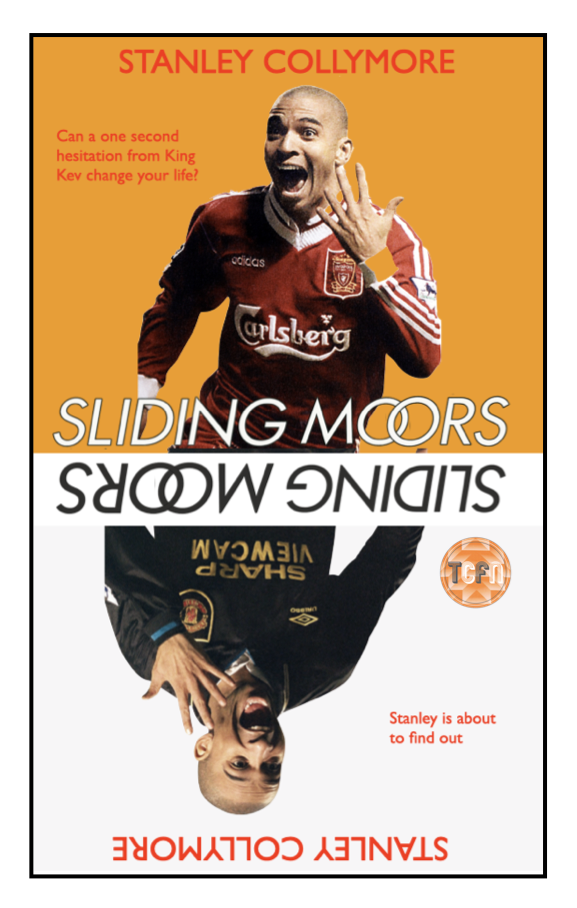
SLIDING MOORS
So, you’re back. We hoped you would be.
No messing about this week — straight into it. The Unathletic is diving headfirst into three more big ’90s transfers. We might even stumble into some proper journalism as we unpick the fickle world of mega-money moves and investigate if maybe, just maybe, one of the Premier League’s most famous flops wasn’t entirely the players’ fault.
This week we look at:
Stan Collymores move to Liverpool and what could have been.
Savo Milosevic and the difference a name makes.
Big Les becoming a Sir.
Ok let’s go. Now then. Riddle us this:
Willie Groves.
Alf Common.
Syd Puddefoot.
David Jack.
John Charles.
Denis Law.
What links them? Who came next? And can you finish the list?
If your answer to all three isn't basically “I dunno mate, you tell me” — congratulations, you’re in the right place.
We know everyone assumes The Unathletic is written by a gang of peak alpha males who’d happily tell Andrew Tate to make us a sandwich. Wrong. We’re card-carrying members of the retro cult, just like you. We’re the type who’ll go full civil war over whether Soccer AM was genuinely funny… or if we were all just savagely hungover at 10am every Saturday.
THE RUDD AWAKENING
THE BEGINING…
May 1995. What a time to be alive. The whole of the UK seemed to be living on a diet of Britpop and optimism. Oasis were rolling with it, Blur chirping back from the south, The Prodigy casting Voodoo spells on the dance floor, while Cypress Hill were the soundtrack to every half-lit squat and student digs. Sensible World of Soccer the only religion that made sense, and Stüssy was the gospel according to streetwear.
The Premiership was… good. Solid, even. Cantona had added a heady mix of French style and volatility. Wingers believed in chalk on their boots, the introduction of Monday Night Football meant you only had to stay sober on Thursdays, and British 20-goal-a-season strikers lurked on every street corner.
But “good” wasn’t enough. “Good” is a night at home watching Ripley and Wilcox providing industry but not exactly excitement. Good is the kind of football you half-watch while you’re thinking about work the next morning.
Then it happened. In 1992 English football had dropped a tab of ‘Prem’, but in the summer of ’95 it was suddenly coming up hard on it. The floor shaking, lights strobing, stomach twisting with adrenaline and lager. Suddenly, the Premiership wasn’t just a league anymore — it became a full-blown rave. A dirty, messy, glorious party, where imported legends culture-clashed with the ex-Div One locals… and won. A fever dream of attacking football, exotic names, legends you never dreamt of seeing play live, or even on Match of the Day. Moments that felt like they’d stay with you forever.
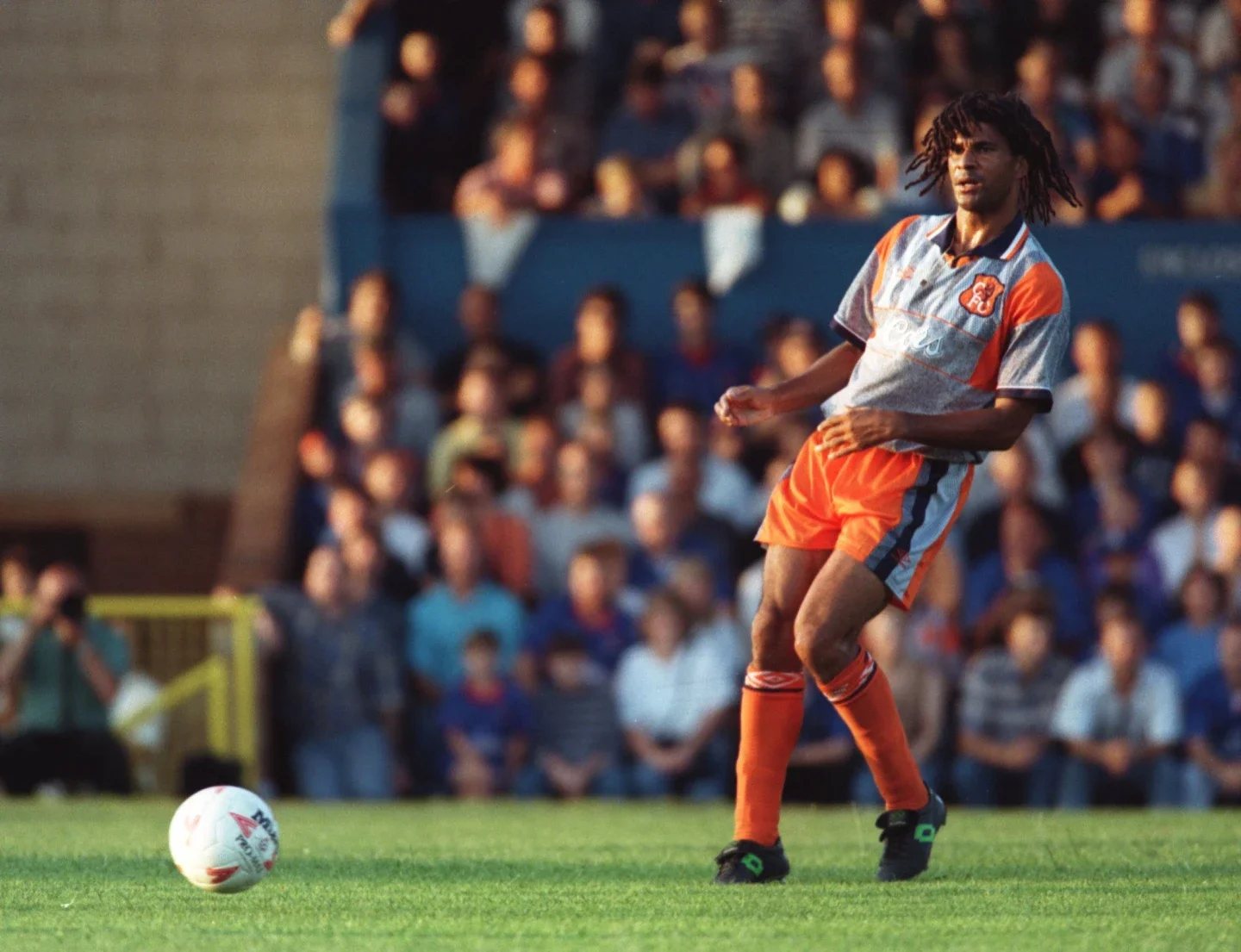
The precise moment it happened? Impossible to say. History gets blurred at the edges when you’re high on ‘Prem’ and the strobes kick in. But maybe, just maybe its was June 5th 1995. A night when English football, sweating and gurning, suddenly felt an aura enter the party. The lights bounced off Dion Dublin’s skull like a disco ball, and then — out of the haze — came a silhouette. The dreads. The swagger. The impossible presence of a man who looked a bit like Ruud Gullit. And then you realised — it was Ruud Gullit!
That was the ignition. The spark. The tipping point when football stopped being very good and became something else entirely — thrilling, unpredictable, unforgettable. The kind of thing you live for as a fan. That was the night English football went out on the lash with Matt Elliot and came home with Ruud Gullit.