
SLIDING MOORS
PRESEASON SUMMER TRANSFERS JULY
BLOG 3 - 1995/96 SEASON
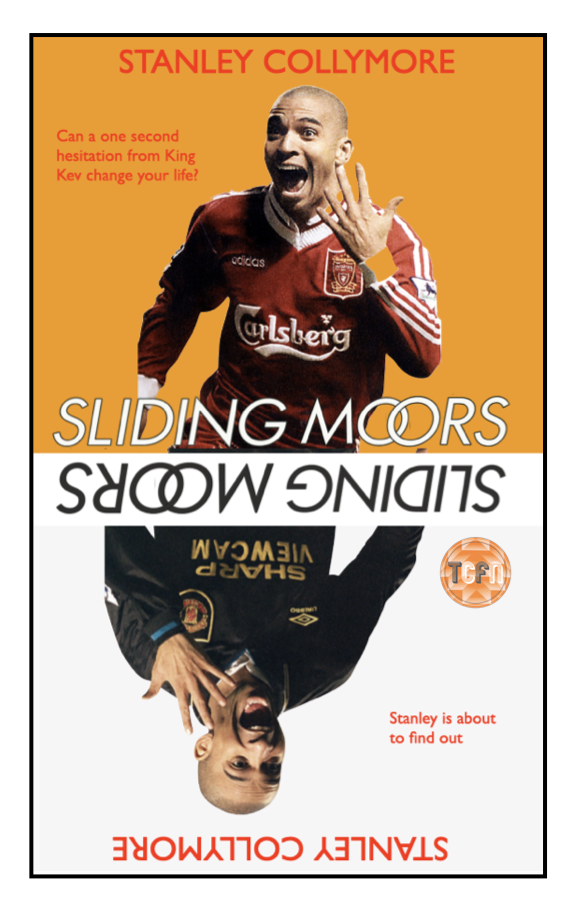
Les Ferdinand QPR to Newcastle United £6 million
-
Stan Collymore Nottingham Forest to Liverpool £8.5 Million
-
Les Ferdinand QPR to Newcastle United £6 million - Stan Collymore Nottingham Forest to Liverpool £8.5 Million -
STANLEY COLLYMORE

CLICK TO WATCH STANS TOP FORREST GOALS
Now then. Riddle us this:
Willie Groves.
Alf Common.
Syd Puddefoot.
David Jack.
John Charles.
Denis Law.
What links them? Who came next? And can you finish the list?
If your answer to all three isn't basically “I dunno mate, you tell me, You’re wrting this blog” — congratulations, you’re in the right place.
We know everyone assumes The Unathletic is written by a gang of peak alpha males who’d happily tell Andrew Tate to make us a sandwich. Wrong. We’re card-carrying members of the retro cult, just like you. We’re the type who’ll go full civil war over whether Soccer AM was genuinely funny… or if we were all just savagely hungover at 10am every Saturday.
And here’s the kicker: not only do we love a retro question, we love a retro Sporcle quiz even more. So yes, we’ve made one for this very article. Click below, get the answer to the riddle above and fall headfirst into the rabbit hole, and don’t say we didn’t warn you.
So what you’ve probably twigged by now is this was a very long-winded way of telling you that on July 3rd, 1995, Stan Collymore smashed both the British transfer record and the record for the most expensive British player ever.
How? By continuing his meteoric rise — which, at its absolute peak, would one day see him turning out for the mighty Bradford City — with an £8.5 million move to Liverpool from Nottingham Forest.
This came hot on the heels of an outrageous season at Forest, where he racked up 22 goals and 6 assists, dragging a newly promoted side all the way to 3rd place. And don’t forget the season before — he’d bagged 27 to haul Forest back into the Premier League.
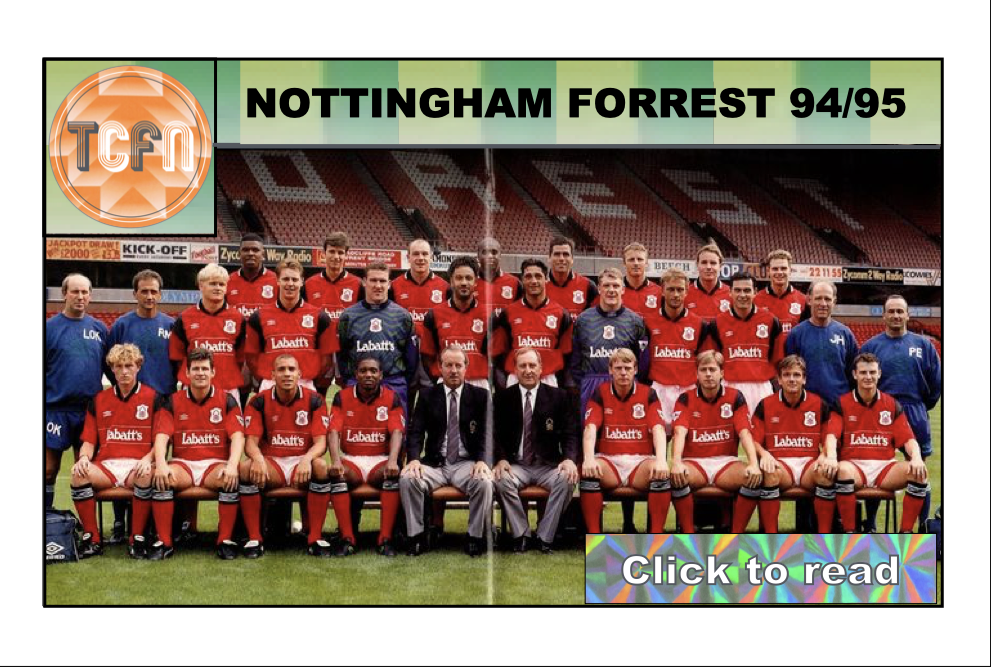
READ: The 42’s great article about this peak 90s Forrest team
That ’94/95 Forest team was pure black-label magic — the Carling years at their finest. Iconic names everywhere: Bryan Roy, Steve Stone, Stuart Pearce, Colin Cooper, Scott Gemmill, Lars Bohinen, and Haaland Senior himself — all orbiting around Stan, the undisputed main man.
But for all that, don’t expect a statue outside the City Ground anytime soon. As manager Frank Clark — normally the most patient of men — later admitted:
"Don't ask me to explain what was in Collymore's mind. I'm not sure I will live long enough to understand exactly how the boy's brain works. Some people might accuse me of treating Stan with kid gloves on most occasions. My answer would be: you try and cope with the lad, because it's not easy. I remember him decking Alf-Inge Haaland with a left hook during training. I described it as a Henry Cooper special."
A Henry Cooper impression in front of Colin Cooper, before effectively demanding a move to Liverpool… Peak Stan.
That’s the paradox of Stanley Victor Collymore: mercurial talent, combustible character. Today he’s better known as a full-time clickbait machine, rent-a-gob, and punditry chaos merchant. But back then? He was one hell of a striker.
And — curveball — he’s also the author of one of the most frank and brutally honest sporting autobiographies ever written. Tackling depression head on.
Football’s fickle. And for Stan, the sliding-doors moments seemed to come with every transfer.
The first arrived in October 1993, when one of our favourite ’90s managers rocked up at relegation-threatened Southend. Spotting raw, untamed talent, he slapped down £150,000 to make Collymore his marquee signing — and Stan promptly repaid him with 15 goals in 30 games to steer the Shrimpers to safety.
Who was this great manager? The one and only Barry Fry. Yes, Mr Diplomacy himself. Barry lit the fuse on Stan’s career, coaxing the very best out of him with a carrot — a sharp contrast to his usual MO of battering half the dressing room with a stick.
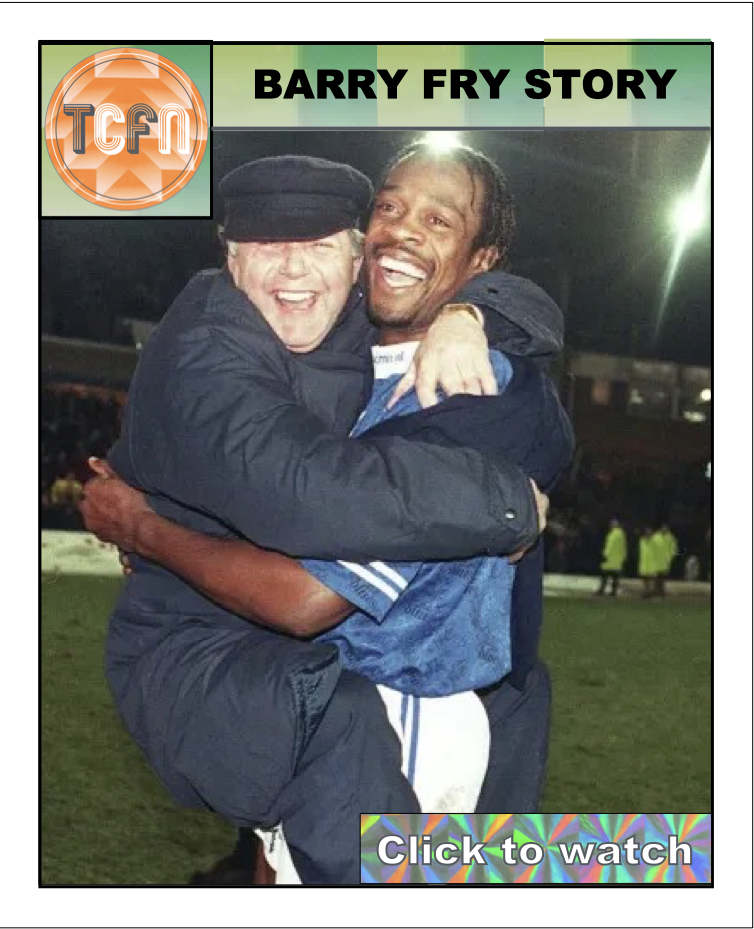
WATCH: Steve Clarridge tells a brilliant story about Barry Fry’s unique man management style
But before we dive too deep into Bazza (and trust us, that wonderful day is coming), let’s stick with Stan — and those razor-thin margins that make or break big-money moves.
One thing we love about nearly all ’90s Premier League transfers is they were the work of one man, and one man only: the manager.
Managers who didn’t need anyone to “direct their football” — whose idea of data analysis was checking the race card on the way to the bookies. And that’s why ’90s football is full of beautiful, instinctive moments… and not just on the pitch.
Take Stan. He was never supposed to sign for Liverpool, he thought he was Manchester United bound.
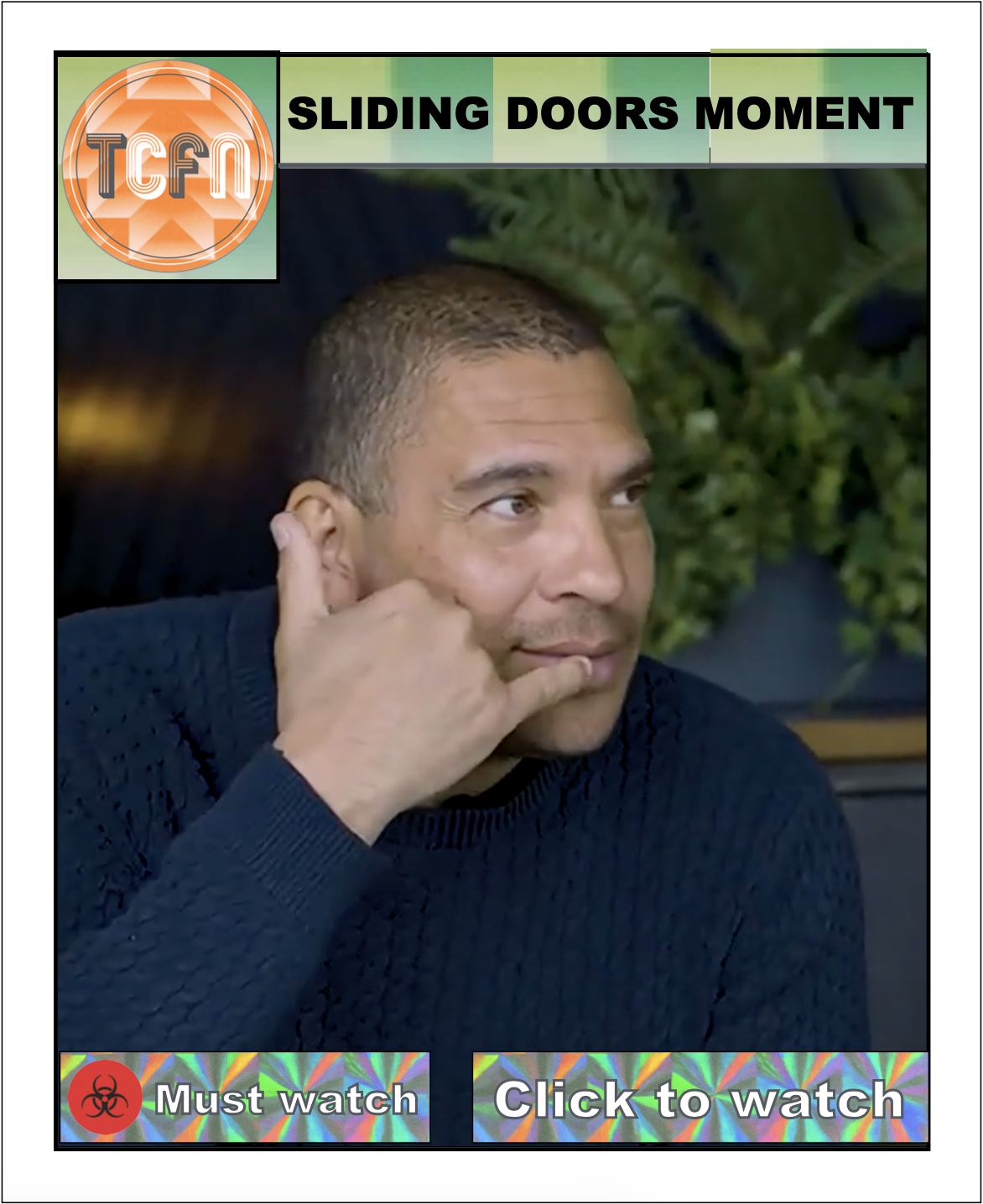
MUST WATCH: Stan tells all about his sliding door moment and how some 90s strike forces could have been very different
One of football’s great sliding-door moments — all because Keegan hesitated for a second.
Would Stan have won more than his three England caps under Sir Alex? (For context: Andy Cole only managed 15 caps and a single tournament appearance.)
And if Stan had gone to United, who would Liverpool have turned to instead? Could the 30-year title wait have ended in 1996 instead of 2020?
We’ll never know. Because Kev paused… and the rest is history.
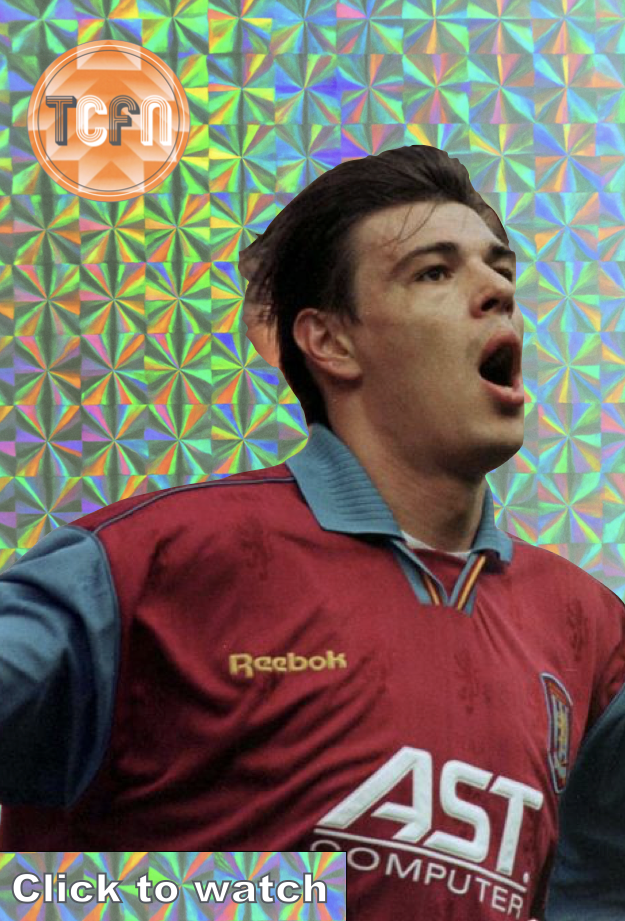
SAVO MILOSEVIC
Make it stand out
Whatever it is, the way you tell your story online can make all the difference.
When your surname is Milosevic and you’re a striker, it’s probably not ideal to move to a country where it sounds suspiciously like Miss-a-lot-evic.
Serie A? No problem. La Liga? Safe. But Savo came to England — and it wasn’t because he backed himself not to miss. It was because he spoke very little English. So little, in fact, that by the end of his first week at Villa his new “best mates” Gareth Southgate and Ugo Ehiogu had convinced him that A traditional English welcome phrase was: “You need to throw your clothes in the bin.”
So yes, that’s how Savo introduced himself to journalists. With a big smile and effectively a : “Hello mate, your clothes are shit.”
Now you’d think the Villa PR team might have had his back, right? Help their new star striker bed in quietly? Absolutely not. Instead, they had him pose in his unveiling photo wearing a Villa-branded bandana. There wasn’t just one bandana either — they made hundreds of them to flog in the club shop.
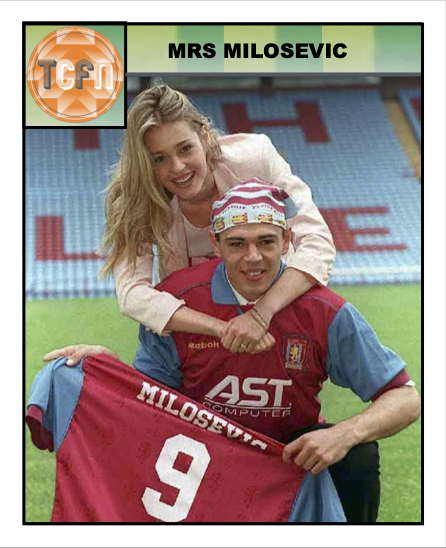
The logic? They thought the bandana was Savo’s “thing.” His trademark look. Why? Because the few times they scouted him at Partizan, he’d been wearing one. Only… he was wearing it because he’d just had a head injury, and the medical staff made him keep it on. This also means we think Villa only scouted their star signing about 3 times - ah good old 90s transfers.
So let’s recap. The first time 99% of British football fans laid eyes on you, you were in a Villa-branded bandana. You greeted journalists by telling them their clothes were rubbish. And your surname basically translated as “Miss-a-lot” in a country where the tabloids loved a pun as much as they loved a Fake Sheik sting.
Which brings us to player welfare — a phrase which in 1995 meant little more than a whip-round to bail out the lad who’d been nicked on the Christmas party.
As Savo himself tells it, like most foreign signings arriving in the Premier League back then, he got zero help settling into England. No language lessons. No house. Just a posh hotel room where, by his own account, he and his girlfriend sat alone, glued to the TV as the Yugoslav wars raged back home, praying friends and family were safe.
We never said this was all going to be laughs.
So maybe there are good reasons Savo “flopped.” Maybe he didn’t even flop that badly — 33 goals in 90 Prem games isn’t that shabby, Teddy had the same goals per game ratio for Manchester United. Maybe it was just too easy for the tabloids to hammer him with Miss-a-lot-evic headlines. Never forget he scored this beauty to win the 1996 League cup…
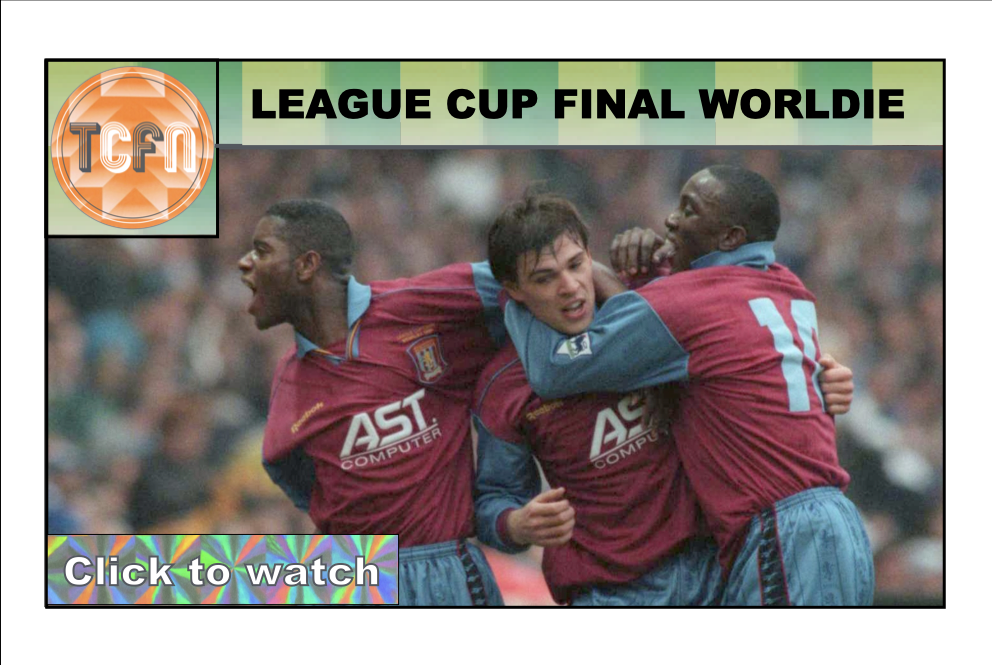
QUICK WATCH: Savo’s League cup final wonder goal
Maybe from this point on, foreign signings started thinking twice about how their names might play in English, is this why Stefan Kuntz turned down a move to the Premier League.
Sadly, it was a lesson not learned by Rafael Scheidt when he joined Celtic in 1999. Six painful months later, the Scottish press had decided he was exactly that.
LESLEY FERDINAND
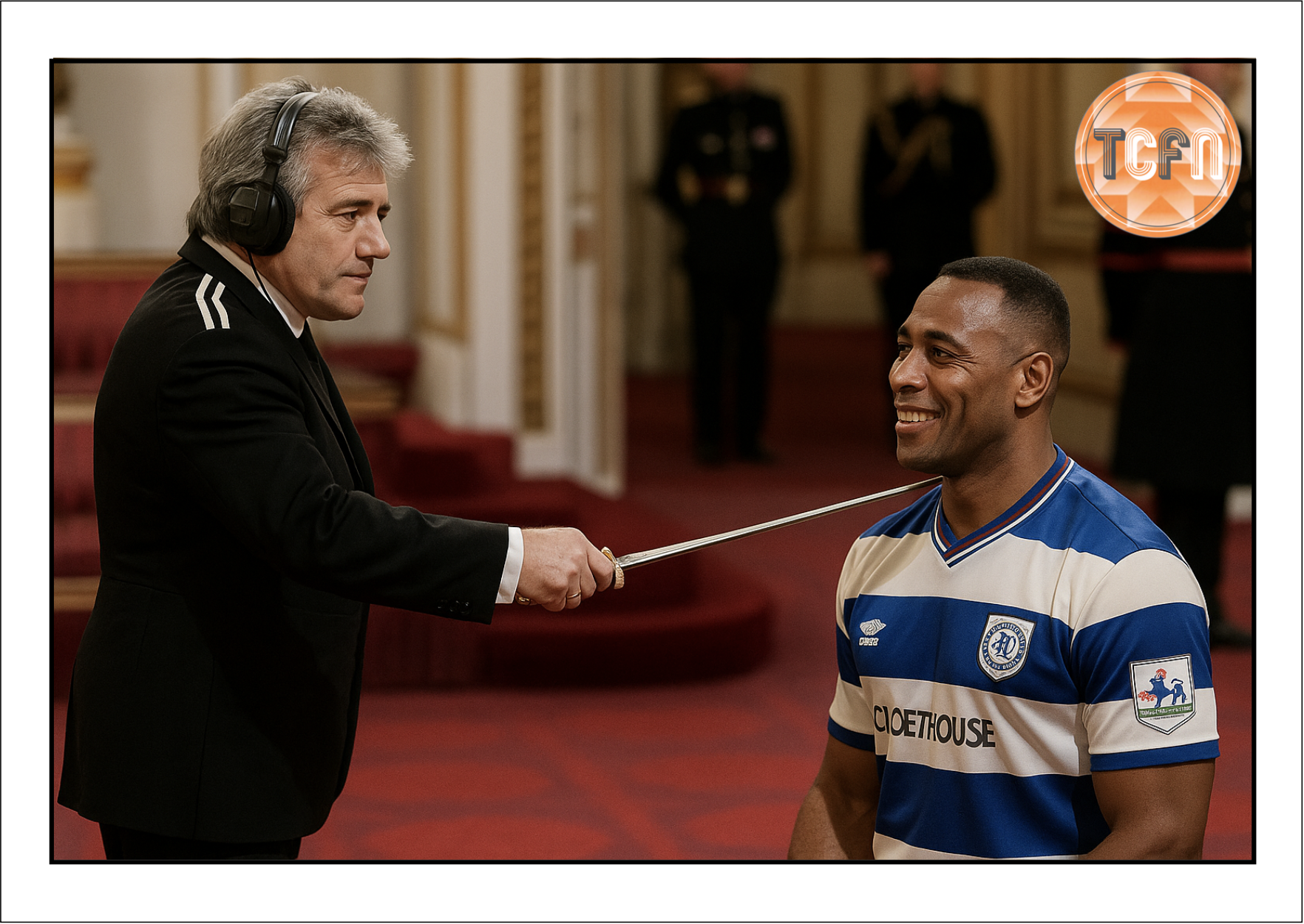
So what do you do when you’ve had £6 million burning a hole in your back pocket for the last seven months? Easy. You go out and buy a Sir.
Collymore had his rags-to-riches sprint to the top flight via Southend and Forest — but Les Ferdinand’s path was even more unusual.
As a teenager, Les never signed for a professional academy. At 20, he was playing non-league for Hayes. QPR eventually took a punt on Big Les’s raw talent, loaning him out to Brentford — then a bottom-flight club. But far more interesting was the year he spent on loan at Beşiktaş in Turkey.
Now, we all know British players didn’t exactly flock abroad in the early ’90s. Even the mighty Ian Rush came back from Italy grumbling that it was “like living in another country.” But Big Les bucked the trend. Despite nearly killing a pigeon at his unveiling, he went on to bag 17 in 32.
And yes, we would give you the link to the full Les pigeon story — but it’s buried on Jake Humphrey’s High Performance Podcast. Jake’s got a big enough head already, and trust us, the story’s not nearly as funny as he seems to think. Here’s the gist:
The players each got a pigeon to release on the pitch before the season. Les chucks his up — it hits the deck. Tries again, higher this time — thud, straight back down. Third time lucky, Les lobs it skywards, it finally flies off… presumably to die on the stadium roof unaware it had died at the hands a man who would go on to score the Premier leagues first ever back to back hat tricks.
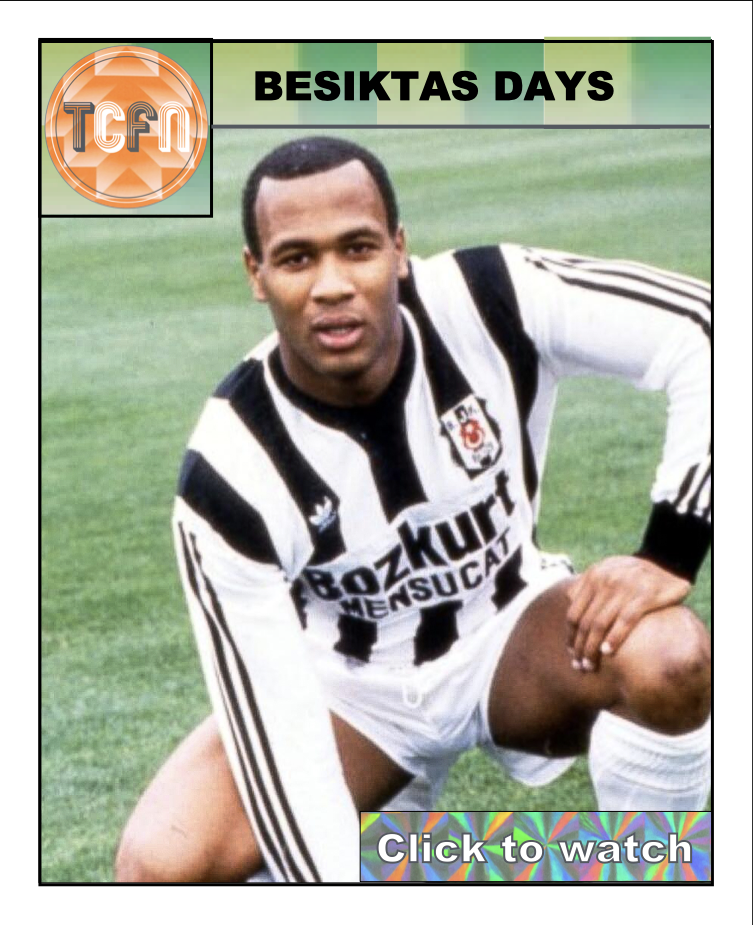
QUICK READ: Les Ferdinand talks about his time at Besiktas
Life was good in Turkey for Les as he scored goals in many of Besiktas’ biggest games, including the Turkish cup final, all whilst sporting this absolute banger of an Adidas strip.
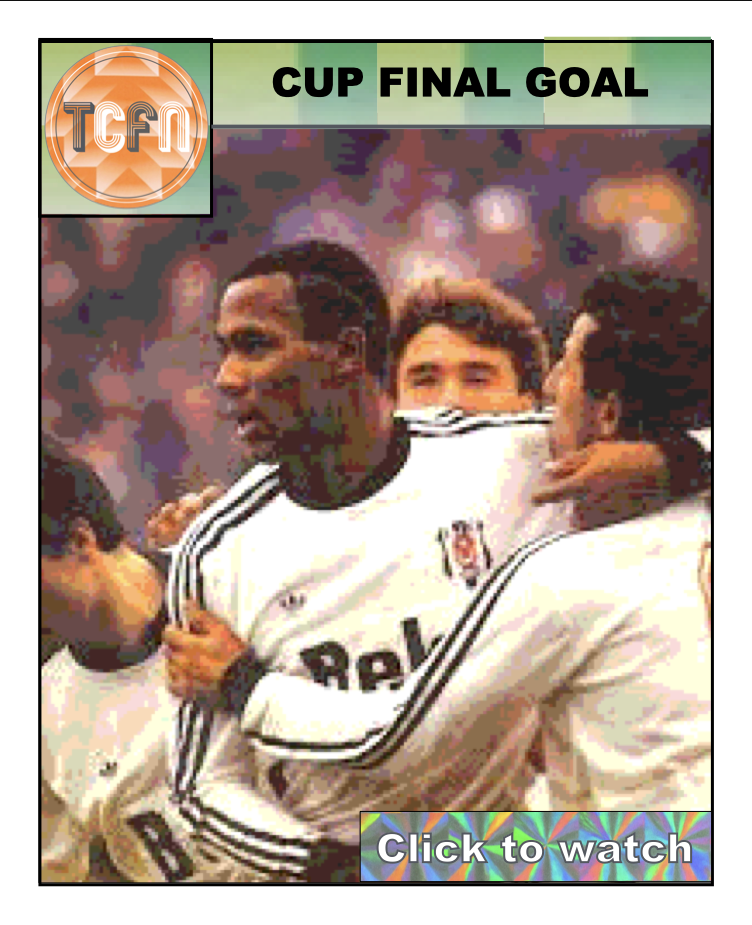
QUICK WATCH: Les talks us through his cup final goal
When Les returned to QPR in 1992/93, he hit the ground running. Normally QPR finishing 4th would be the fairytale story of the season — but this was the year Norwich somehow finished 3rd with a negative goal difference.
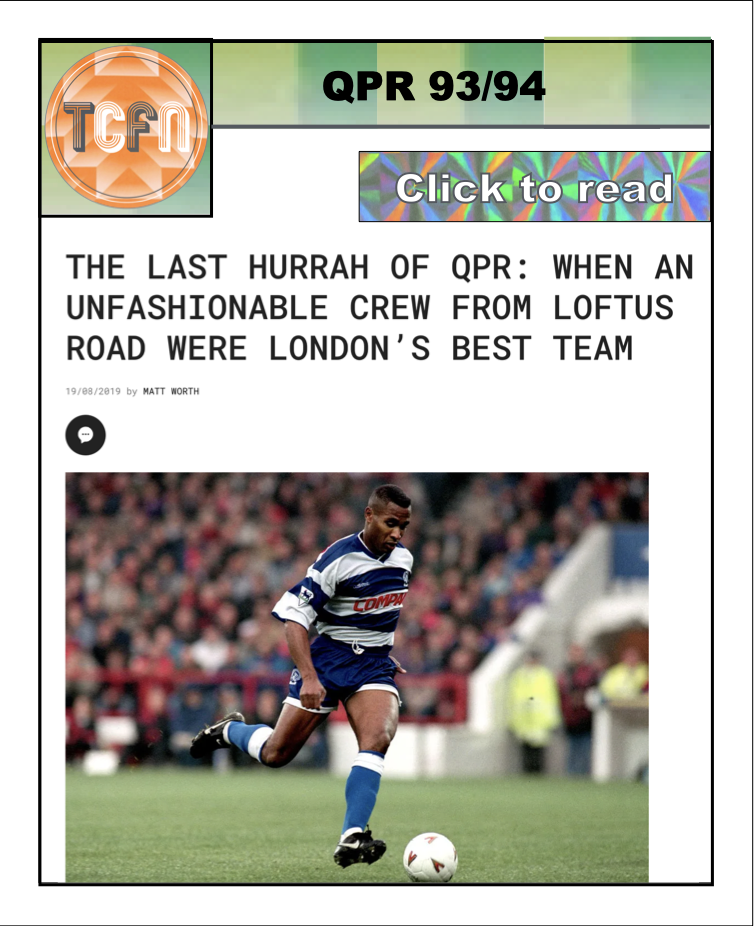
LONG READ: The 92/93 QPR that defined early 90’s simple brilliance
That QPR side was pure early ’90s simplicity: a tiny squad playing a perfectly balanced 4-4-2. Half in their twilight years, half waiting for their big move.
Darren Peacock locking down central defence, long before that glorious ponytail made its way north to valiantly act as a one-man backline for King Kev.
Andy Sinton, the most functional 90s winger imaginable, pinging in an endless supply of crosses.
Bradley Allen, basically a deep-lying forward before anyone outside of Championship Manager knew what one was.
And best of all, a midfield pairing of Ian Holloway — everyone’s favourite West Country philosopher — alongside Ray “Butch” Wilkins, an actual regista dictating the tempo with skills honed at the San Siro.
Lets take a moment to remember Ray ‘Butch’ Wilkins a player truly ahead of his times.
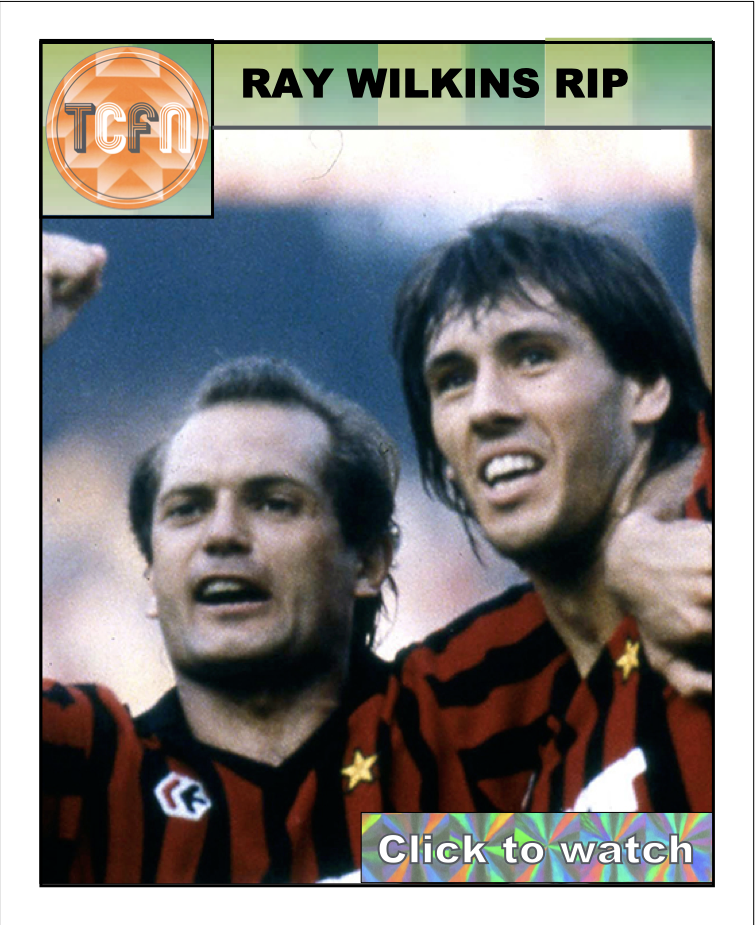
WATCH: Ray Wilkins best goals - theres some beauties
The crown jewel was of the team was of course Big Les. Except… he wasn’t actually that big. Just 5'11" — a nickname almost as misleading as his leap was terrifying.
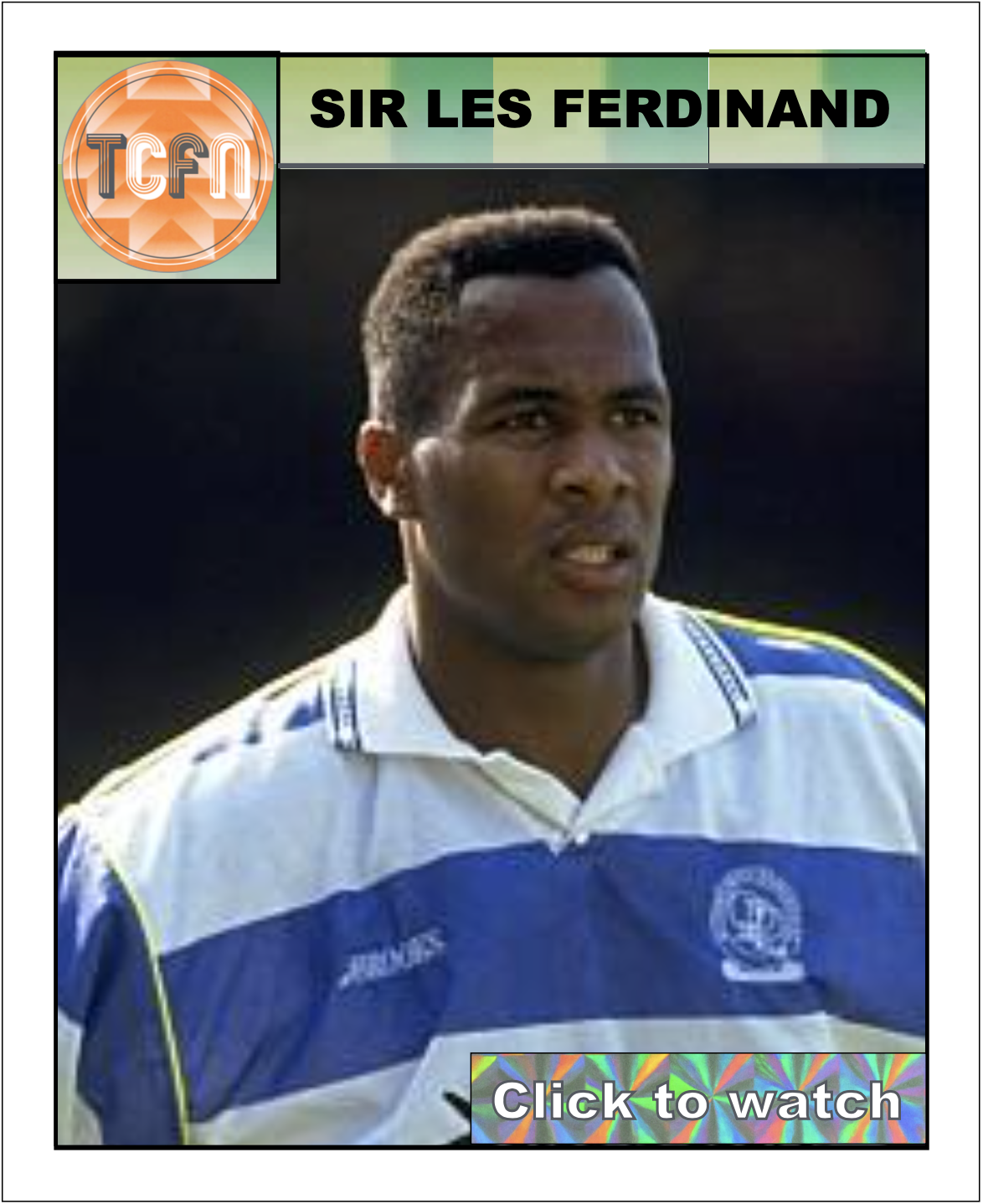
WATCH: Les Ferdinands Top 10 QPR Goals
By 1993/94, Trevor Sinclair had replaced Andy Sinton (who went off to Wednesday to lose as many cup finals as humanly possible in one season). Les, meanwhile, was better feed with chances than a fat man on Super Bowl night. The goals flowed: 16 in 1993/94, 24 in 1994/95. So when Newcastle needed to fill the Andy Cole-shaped hole in their attack, who better than ‘Not as big As you’d think Les’. Kevin Keegan had a plan: he was going to build a team around Sir Les. And we were all going to love every minute of it.
Now who fancies a quick game of
SPOTTERS BADGE